2026 How to Choose the Best Sany Mini Excavator for Your Construction Needs?
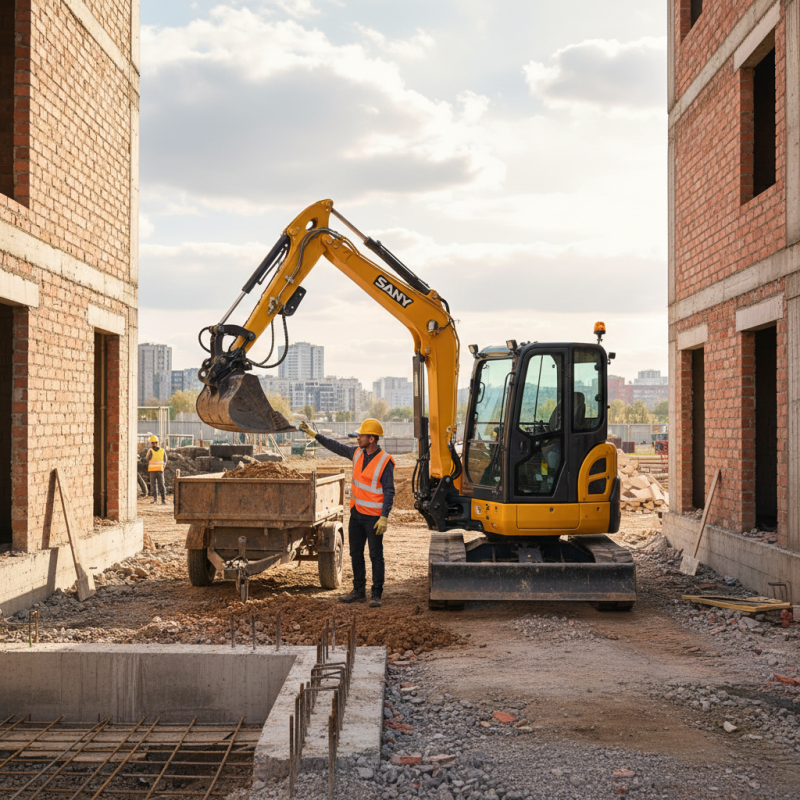
Choosing the right equipment for construction can be daunting. The Sany Mini Excavator stands out as a versatile option. It offers power and precision for various tasks. This equipment is ideal for tight spaces, making it perfect for urban construction sites.
One must consider several factors when selecting a Sany Mini Excavator. Think about the job type, site conditions, and required attachments. Understanding these details helps in making an informed choice. Despite its advantages, if not used correctly, even the best excavators can underperform.
Investing in a Sany Mini Excavator requires reflection. Are you maximizing its capabilities? Will it truly meet your construction needs? Delve deep into your project requirements before making a purchase, ensuring that it aligns with your specific goals.
Key Features to Consider When Selecting a Sany Mini Excavator
When selecting a mini excavator, several key features are crucial for construction needs. One critical aspect is engine power. A typical mini excavator offers between 20 to 50 horsepower. This range allows for various tasks, from trenching to lifting heavy loads. Engine efficiency also affects fuel consumption. Reports indicate that compact models can save up to 20% in fuel over larger machines. This efficiency translates into savings, especially during extended projects.
Another vital feature is the lifting capacity. Many mini excavators can lift loads from 1,000 to 5,000 pounds. Understanding the weight of the materials you'll be handling is essential. If the requirements exceed the machine's capacity, it could lead to safety hazards. A machine that feels too light may compromise productivity.
Lastly, digging depth and reach capabilities matter greatly. Standard digging depth ranges from 8 to 12 feet. However, this might not suffice for deeper projects. Inadequate reach can lead to limitations in project execution. Be realistic about your construction needs. Consider site conditions and how they impact equipment performance. When picking the right model, avoid the temptation of going for higher specs unilaterally—it often results in unnecessary costs. Choosing wisely ensures efficiency and effectiveness.
Assessing Your Construction Needs for Mini Excavation Projects
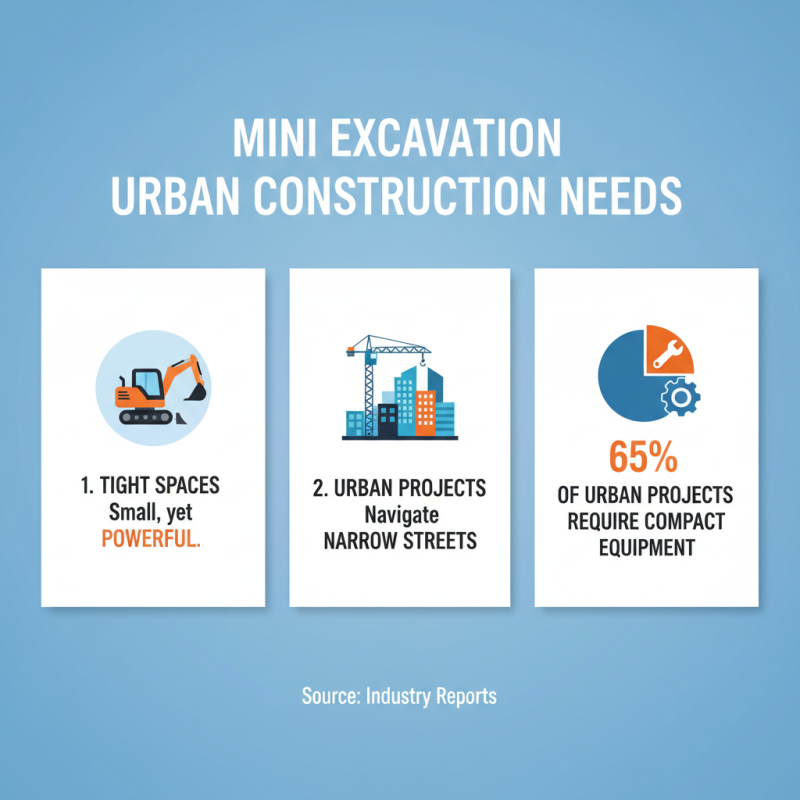
Assessing your construction needs is critical when selecting a mini excavator. Small yet powerful, mini excavators play a vital role in urban construction. They excel in tight spaces, where larger machines cannot fit. According to industry reports, 65% of construction projects in urban areas require equipment that can navigate narrow streets and tight corners.
Consider the size of your projects. If you frequently work on residential sites, a mini excavator with a compact design is essential. Productivity can significantly increase with the right model. A report from a leading construction analytics firm shows that using the right mini excavator can boost efficiency by up to 30%.
Evaluate the specific tasks involved in your projects. Do you need enhanced digging depth or a powerful hydraulic system? Not all mini excavators meet these demands. Sometimes, opting for a slightly larger model can provide the necessary power without sacrificing maneuverability. Balancing size and capability is a key consideration for many contractors.
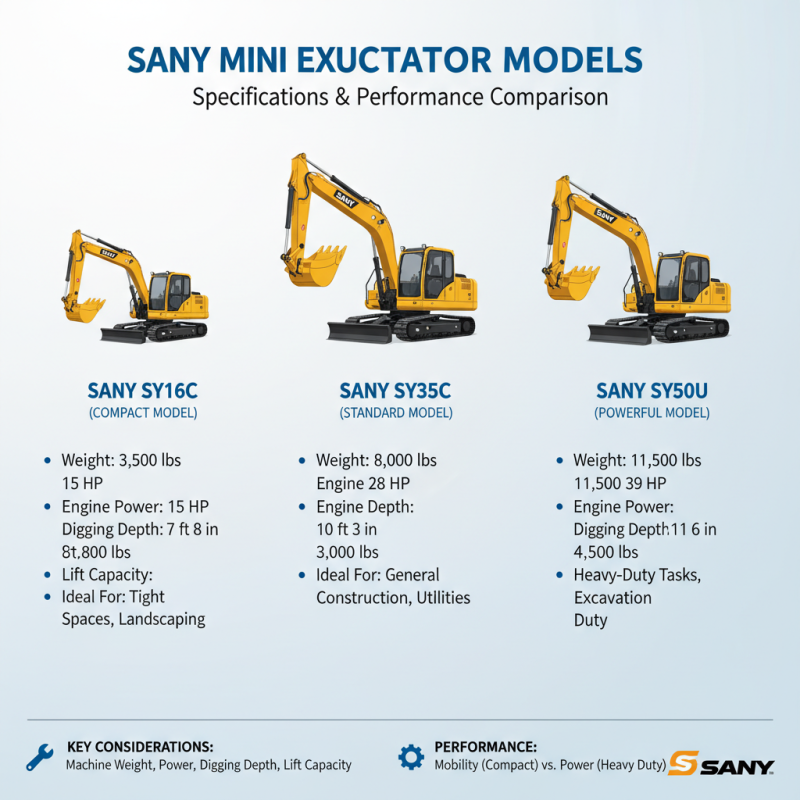
Comparing Sany Mini Excavator Models: Specifications and Performance
When selecting a mini excavator, understanding the specifications is crucial. Different models offer varying lift capacities, engine power, and digging depth. Look closely at the weight of the machine, as it can affect mobility and stability. Some models are more compact, making them ideal for tight spaces. Others provide a higher power output, suitable for heavy-duty tasks.
Performance metrics also matter significantly. Tracking fuel efficiency and hydraulic capability can save costs in the long run. Review user experiences and test reports to gauge real-world performance. However, keep in mind that marketing specs sometimes don’t tell the whole story. Some models may perform poorly under certain conditions, revealing weaknesses.
Consider the attachment options available. A versatile machine can increase productivity on various projects. Think about what attachments you’ll need most often. But don’t overlook ease of maintenance. Some models require more frequent servicing, which could impact your operational budget. Evaluating all these aspects thoroughly will help you find the most suitable choice for your construction needs.
Budgeting for Your Sany Mini Excavator Purchase: Costs and Financing Options
When budgeting for a mini excavator, it's essential to consider the overall costs. The
purchase price is one factor, but don’t forget about
ongoing expenses. Maintenance, fuel, and
insurance should be part of your budget. Prices for mini excavators can vary greatly based
on features and capabilities. Some models may look appealing, but their long-term costs can be high.
Financing options are available but can be confusing. Leasing allows for lower monthly
payments, but ownership is not the end goal. Buying outright means no monthly
burden, yet the initial cost can strain your budget. It's a balancing act. You might save
on interest, but be cautious of high maintenance later. Analyzing your
specific needs can reveal
what financing method suits you best.
Research extensively before making a decision. Take into account both
upfront and hidden costs. Assess whether you truly need the latest features.
Sometimes, a less expensive option meets your requirements just as well. Always reflect on your choices
before committing to ensure you grasp the financial implications of your investment.
Understanding Maintenance and Support for Sany Mini Excavators
When considering a mini excavator, maintenance and support are crucial factors. Regular maintenance can significantly prolong machine life. It's vital to understand the routine tasks involved. Maintaining oil levels, checking filters, and cleaning air intakes should be daily activities. Ignoring these can lead to unexpected breakdowns.
Knowing where to get support is equally important. A reliable dealer or service provider makes a difference. They should offer quick responses and access to spare parts. Some users find it challenging to locate trustworthy service. This can lead to delays in repairs, which can be frustrating. Establishing a good relationship with a service provider is beneficial for keeping the machine in top shape.
User experiences can also vary widely. Some may find routine maintenance tasks easy, while others struggle with understanding them. It's worth investing in training if needed. Regular check-ins with support teams can help in troubleshooting common issues. Awareness of warranty coverage can protect your investment too. Ultimately, successful maintenance requires a commitment to ongoing care and support.
2026 Mini Excavator Maintenance Costs vs. Usage Frequency
This chart illustrates the average maintenance costs associated with mini excavators based on their usage frequency. As the frequency of use increases, so does the maintenance cost, indicating a clear relationship between usage and upkeep obligations.

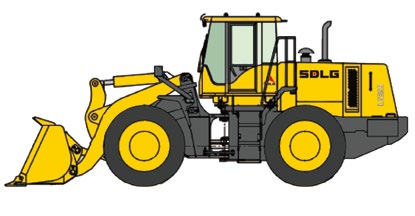 Wheel Loader
 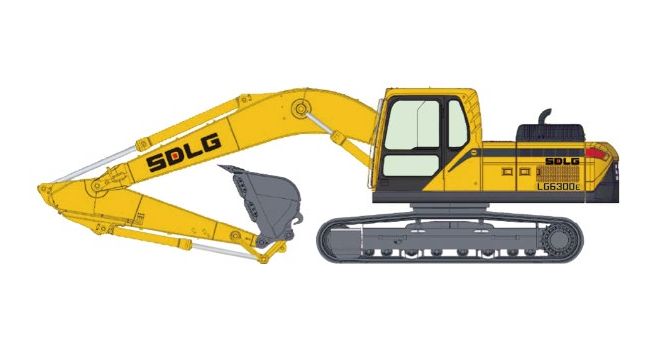 Excavator
 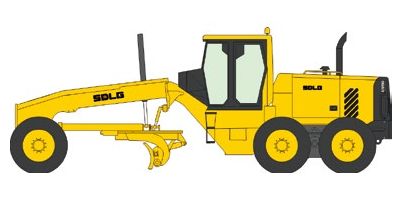 Motor Grader
 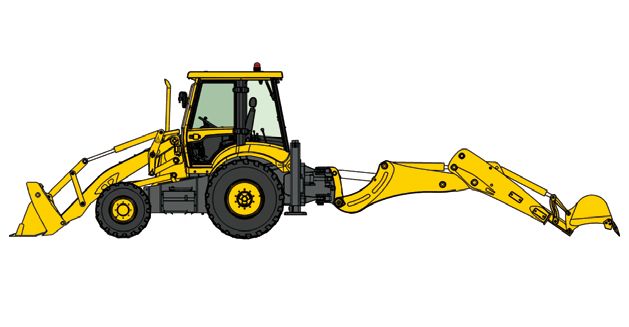 Backhoe Loader
 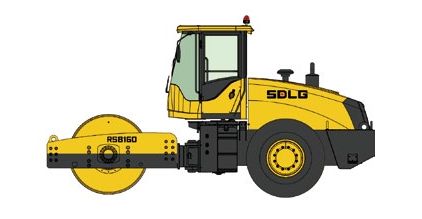 Road Roller
 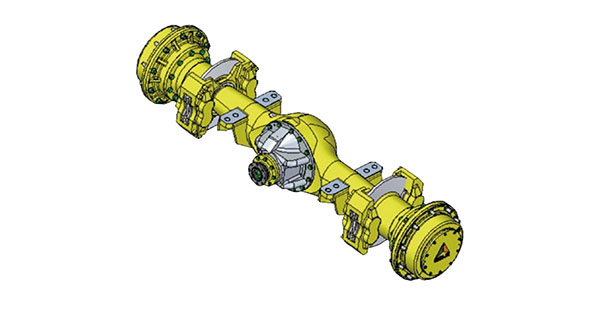 Spare Parts